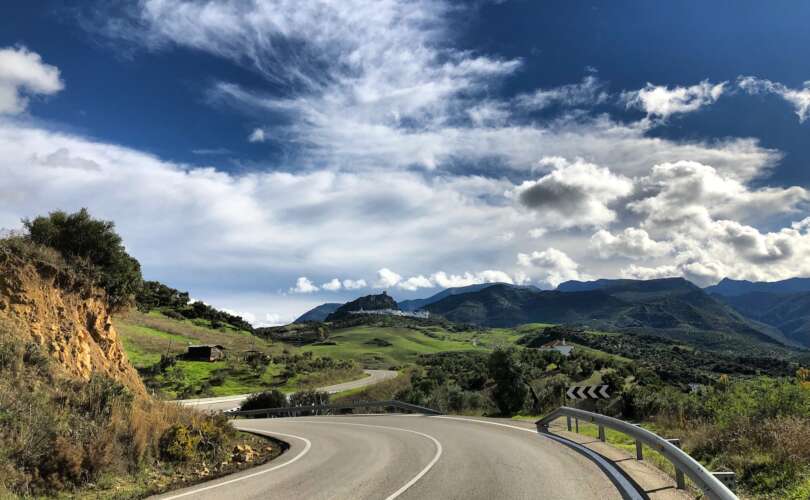
Visiting Southern Spain’s Andalucia on your bike is a captivating mix of dramatic landscapes, Moorish architecture, vibrant cities, and centuries of history. From ancient palaces to surreal natural parks, this region offers some of the most iconic sights in Europe. If you’re planning a trip, here are five must-visit places in Andalusia that showcase the very best of its culture, history, and scenery.
Ronda
Perched dramatically above a deep gorge in Málaga province, Ronda is one of the most breathtaking towns in Spain. The town is famous for the Puente Nuevo bridge, which spans the spectacular El Tajo gorge and connects the old Moorish quarter with the newer part of the city.
Walking through Ronda feels like stepping back in time. Narrow cobbled streets, whitewashed buildings, and historic plazas create a charming atmosphere. The town is also home to one of Spain’s oldest bullrings, the Plaza de Toros de Ronda, which played an important role in the history of bullfighting.
Visitors often come for the views alone—sunsets over the gorge are unforgettable—but Ronda also offers fascinating museums, scenic walking paths, and excellent Andalusian cuisine.
Highlights
- Puente Nuevo Bridge
- Plaza de Toros bullring
- Mirador viewpoints over the gorge
- Historic Moorish baths
Alhambra in Granada
The Alhambra is one of the most famous landmarks in Spain and a masterpiece of Islamic architecture. Built during the Nasrid dynasty in the 13th and 14th centuries, this palace complex sits on a hill overlooking Granada with the Sierra Nevada mountains in the background.
The complex includes the Nasrid Palaces, the Alcazaba fortress, and the beautiful Generalife gardens, once used as a summer retreat by Moorish rulers. Intricate geometric patterns, delicate stucco carvings, tranquil courtyards, and reflecting pools make every corner feel like a work of art.
Because of its cultural and historical importance, the Alhambra is a UNESCO World Heritage Site and one of Spain’s most visited attractions.
Highlights
- Court of the Lions
- Nasrid Palace halls
- Alcazaba fortress views
- Generalife gardens and fountains
Mosque–Cathedral of Córdoba
The Mezquita of Córdoba is one of the most extraordinary religious buildings in the world. Originally built as a grand mosque in the 8th century during Islamic rule, it was later converted into a Catholic cathedral after the Christian re-conquest.
The result is a fascinating architectural blend. Inside, you’ll find a mesmerising forest of more than 800 columns and red-and-white striped arches, creating one of the most iconic interiors in Europe. At the centre stands a Renaissance cathedral nave, symbolising the layers of history that shaped Spain.
Outside, the Patio de los Naranjos (Courtyard of Orange Trees) provides a peaceful place to relax before exploring the historic old town of Córdoba.
Highlights
- Hypostyle hall with striped arches
- Ornate mihrab prayer niche
- Patio de los Naranjos courtyard
- Córdoba’s historic Jewish Quarter nearby
Seville Cathedral
Seville Cathedral is the largest Gothic cathedral in the world and one of the most impressive religious monuments in Europe. Built on the site of a former mosque, it symbolises the wealth and power of Seville during Spain’s Golden Age.
The cathedral’s interior is enormous, filled with soaring vaulted ceilings, elaborate chapels, and priceless artworks. It is also believed to house the tomb of Christopher Columbus.
Next to the cathedral stands the Giralda Tower, originally the minaret of the mosque that once stood here. Visitors can climb to the top for panoramic views of Seville’s rooftops and the Guadalquivir River.
Highlights
- The Giralda bell tower
- Tomb of Christopher Columbus
- Grand Gothic interior
- Views over Seville from the tower
El Torcal de Antequera
For nature lovers, El Torcal Natural Park offers a completely different side of Andalusia. Located near Antequera in Málaga province, this protected area is famous for its dramatic limestone rock formations shaped by millions of years of erosion.
The landscape almost looks otherworldly—massive stacked rocks, winding paths, and natural arches create a geological wonderland. The park is also home to diverse wildlife, including mountain goats, eagles, and vultures.
Several well-marked hiking trails allow visitors to explore the unique terrain while enjoying spectacular views of the surrounding countryside.
Highlights
- Unique karst limestone formations
- Scenic hiking trails
- Wildlife and bird watching
- Panoramic views of Andalusia
Final Thoughts
Andalusia is one of Spain’s most diverse and culturally rich regions. Whether you’re walking across the dramatic bridge in Ronda, exploring the palaces of the Alhambra, admiring the arches of Córdoba’s Mezquita, climbing the Giralda in Seville, or hiking through the surreal rocks of El Torcal, each destination reveals a different side of southern Spain. Together, these five places capture the history, architecture, and natural beauty that make Andalucia an unforgettable travel destination.
Contact us if you want a bespoke cycling holiday to visit some of these landmarks.